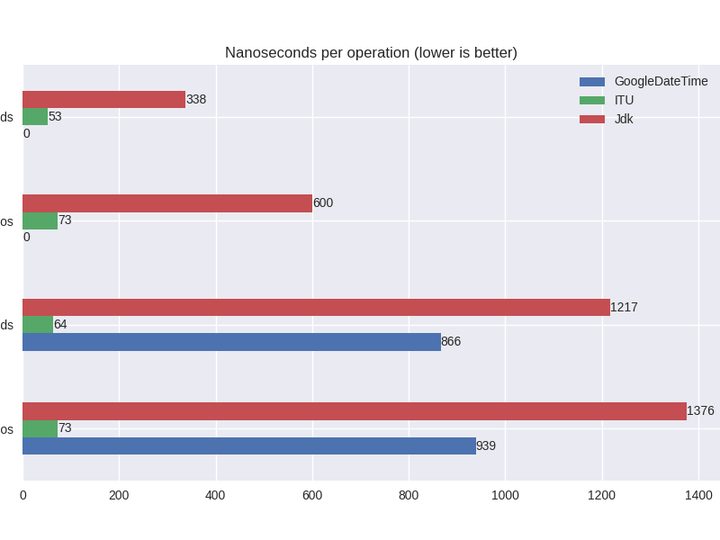
Parsing ISO-8601 21 to 67 times faster than java.time
In September 2026 I spent three days making a date parser faster. It already took less than a microsecond.
In September 2026 I spent three days making a date parser faster. It already took less than a microsecond.
I made a Spring endpoint nine times faster this week. The way I did it is by skipping most of what Spring does to keep you safe.
I change my APIs a lot. I like to work on the API and the implementation at the same time, and move things until they feel right. The README is what pays for that.
The library worked. I spent two weeks rewriting large parts of it anyway, and broke compatibility on the way.
Every client wants one small thing that no other client wants. It is always a few lines of code, and it never belongs in the main code base.
I like profilers. I also cannot use one where I need it most, which is in production, on the request that is slow right now.
Spring has a decorator that keeps your cache honest when a transaction rolls back. It does that by lying to you until the transaction is over.
I want to know where users are, and I do not want to know where users are.
In May I imported the world into MySQL. In October I deleted the database, and the library got simpler.
1488153600. Is that seconds or milliseconds? You find out when the date lands in 1970 or in the year 49,000. APIs send timestamps like that since a number is fast to parse. I wanted to see how much of that is real, so I wrote a parser this weekend.